
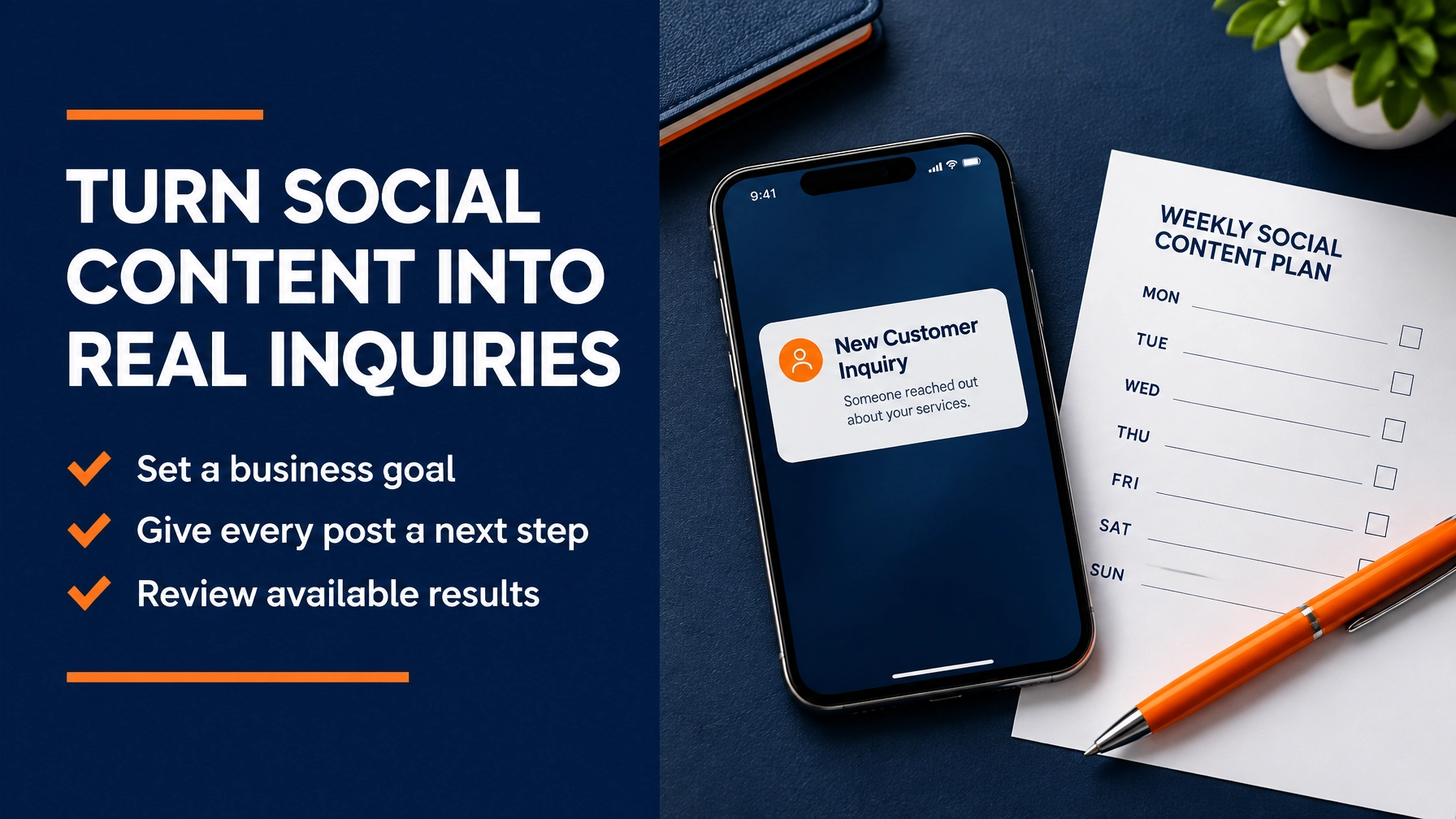
Likes can signal interest. But inquiries, bookings, website visits, and sales show whether your social content is moving people toward a business outcome. To make that shift, begin with the action you want a potential customer to take, and build each post to make that action clear.
You don’t need to publish without direction or chase every new trend. You need a focused goal, a useful message, one next step, and a way to review the results available to you. That’s how social activity becomes a practical part of your customer journey.
Start With the Business Outcome
Before you plan a campaign, decide what progress looks like. Do you want more quote requests, consultation bookings, product-page visits, or direct messages from potential customers?
Choose one primary goal for a defined period. Then identify the audience and offer that fit it. A clear goal gives you a filter for content ideas: if a post doesn’t help someone understand your value or take the next step, revise it.
For example, a local home-cleaning service might focus on receiving more quote requests from households in its service area. Its content could answer common questions about booking, show what a first visit includes, and invite people to request an estimate. The scenario is simple, but it gives each post a purpose.

Make Every Post Point Somewhere
A strong post doesn’t leave the audience wondering what to do. It gives them one clear next step that matches the goal.
For a service business, that might be “Request a quote” or “Send us a message to discuss your project.” A consultant could invite prospects to book an introductory call. A product business might guide people to a specific product page.
Keep the action direct and consistent. If the post asks readers to book, message, follow, share, and visit a website all at once, the main path gets lost. Choose the action that best fits the content and make it easy to spot in the caption and the destination you share.
Then check that the destination follows through. If a post promises a quote, the linked page should make it clear how to request one. If the call to action invites a message, be ready to respond. A smooth handoff helps turn interest into an actual inquiry.

Match the Platform to the Action
The right platform is the one that fits your audience, content, and next step, not necessarily the one with the most likes.
Facebook and Instagram can support visual examples, customer education, and direct paths into a conversation or website visit. LinkedIn can suit professional services and business-to-business content where expertise and a consultation invitation are central. Threads can support concise, conversational posts that build interest around a topic.
Buzz Social Biz supports Facebook, Instagram, LinkedIn, and Threads. Pick the platform or platforms that fit your audience and the action you’re asking them to take. Use Buzz Social Biz as your AI social media manager to create, schedule, and publish content across those supported networks.
Separate Attention From Business Results
Likes and follower counts are easy to notice. They can show that content attracted attention, but they don’t confirm that someone visited your website, asked for a quote, or booked an appointment.
Review available results that connect more directly to your goal. Depending on your setup, these might include direct messages, link visits, form submissions, calls, or bookings. Keep a simple record of where inquiries came from. For example, you can ask new prospects how they found you or use a consistent campaign link for social posts.
The U.S. Small Business Administration recommends setting marketing goals and comparing marketing costs with the revenue they generate. Apply that discipline to your social activity: note what you published, the action you invited, and the relevant results you can review. Treat likes and reach as context, not as proof of business impact.
Build a Practical Campaign
A small, focused campaign can help you move from general posting to intentional customer outreach. Use this simple outline:
- Goal: Choose one business outcome, such as more qualified quote requests.
- Audience: Identify who you want to reach and the need your service can address.
- Content: Share a useful answer, process explanation, product detail, or customer proof point.
- Next step: Tell people exactly how to inquire, book, or learn more.
- Review: Check available results against your goal and adjust the next round.
For the local cleaning service example, the campaign might answer a question about preparing for a first appointment, explain how to request an estimate, and direct interested households to the quote-request path. The business can then review the inquiries it receives and note which posts or links were involved. That’s a practical learning loop, not a promise of a particular result.
Use AI to Keep Activity Moving
Consistent social content takes planning and follow-through. An AI social media manager can help keep the publishing process moving while you keep the business objective in view. The tool can support content creation and scheduling, but you still choose the goal, confirm the offer, and make sure the next step reflects how your business actually serves customers.
That balance makes social media management for small business more purposeful. Instead of asking AI to create content simply to fill a calendar, direct it toward useful themes that support your campaign. Review each post for accuracy, brand voice, and a clear action before it goes live.
Buzz Social Biz is built for AI-powered social media management and supports content creation, scheduling, and publishing. Its paid plan is $29.99/month with 100 Buzz Credits per paid month; unused credits roll over. Elite members receive bundled Buzz Social Biz access where included with their membership. See the plans. Used thoughtfully, AI tools for small business can support small business automation by reducing repetitive content tasks while keeping your campaign goal fixed.
Review, Learn, and Refine
At the end of your campaign period, compare what you set out to do with the available results. Did people take the action you asked for? Did inquiries match the audience you wanted to reach? Was the path from post to contact clear?
If interest appeared but inquiries didn’t, check the next step and destination. If inquiries came in but weren’t a fit, revisit the audience, offer, or message. Change one part at a time when possible, so you can see what may have influenced the outcome.
This is not about expecting every post to generate a sale. It’s about creating a more useful connection between social content and your business priorities, and using what you learn to make your next campaign stronger.
Turn Your Next Post Into a Clear Next Step
Choose one business goal for your next campaign. Write a post that helps your audience understand why it matters, then give them one direct way to act. Afterward, review the available results and use what you learn to refine the next post.
Keep your goal in focus while AI helps you keep the content moving. Create your account and start building a more outcome-first social presence.















Leave a Reply